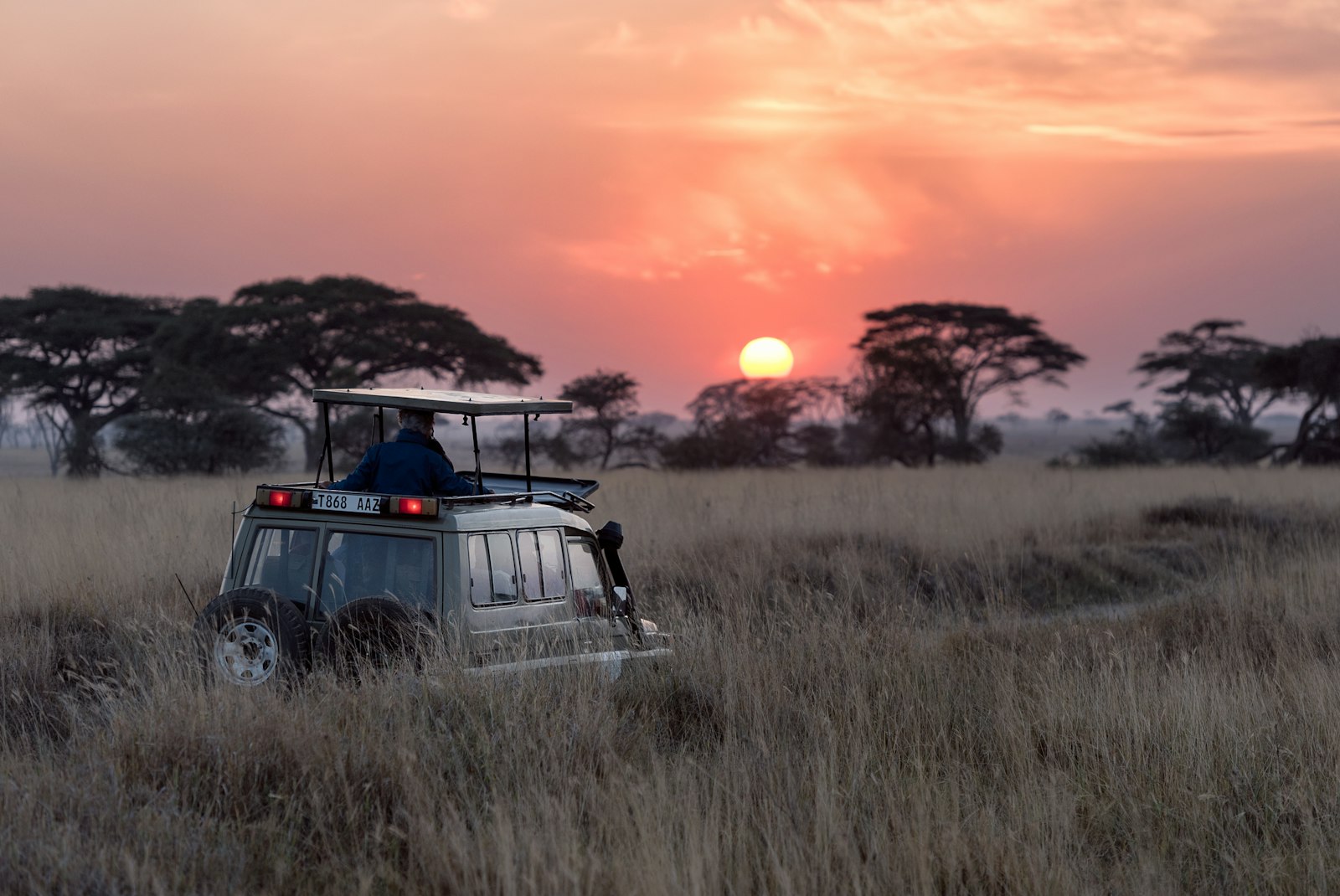
A guided safari in Tanzania is very safe when you follow your guide and the park rules. The risky moments almost always involve leaving the vehicle, walking around camp alone at night, or getting too close to an animal for a photo. Here's what you need to know.
1. The park rules (and why they exist)
Tanzania's National Parks Regulations set the basics:
- Don't get out of the vehicle within 200 m of any animal, except at designated observation points and picnic sites.
- When you are out at an allowed spot, stay within 25 m of the vehicle.
- Speed limit 50 km/h inside national parks. A slower limit applies in the Ngorongoro Conservation Area, which is managed by its own authority — your guide will follow it.
- Never feed, follow, provoke or startle animals — that includes chasing them with the vehicle, sudden noise or flashing lights.
- No horns, no loud music, no litter, and don't remove anything — plants, bones, rocks or feathers.
- No one may be in the park at night except at a camp or lodge. Your guide plans the day to be back in time.
- Drones are not allowed without prior permission — leave yours at home unless your operator has arranged a permit.
2. In the vehicle
- Keep arms, cameras and heads inside when animals are close. Don't stand on seats or sit on the roof.
- Talk quietly and avoid sudden movements — it keeps animals relaxed and the sighting longer.
- Never ask your guide to drive off-track or closer than they think is safe. Good guides refuse, and park authorities suspend guides who break the rules.
- Bring a warm layer: early mornings, especially on the Ngorongoro crater rim, can be cold.
3. In camp and at lodges
Many safari camps are unfenced — animals including elephants, buffalo and hippos can walk through at night.
- After dark, always use the camp escort (askari) to walk between your tent and the main area. Use the whistle or radio in your tent if you need help.
- Keep your tent zipped. Don't keep food in the tent.
- Never walk outside the camp area without a ranger or guide.
4. Health on safari
- Malaria: the main parks are below 1,800 m, so malaria precautions apply — tablets, repellent, long sleeves from dusk (see our Tanzania Travel Essentials guide).
- Tsetse flies are common in the northern safari areas and can spread sleeping sickness. Wear neutral colours (khaki, beige, olive) — dark blue and black attract them — and use repellent.
- Sun and dust: hat, sunscreen, sunglasses and plenty of water. Dry-season dust can irritate eyes.
- Pack your own small first-aid kit and any personal medication — pharmacies are far away.
5. Hot-air balloon safaris
Listen to the pilot's safety briefing, follow the landing-position instructions exactly, and mention any back, neck or mobility issues when you book. Flights depend on weather — a cancellation is a safety decision.
6. People and culture
- Ask before photographing people, including in Maasai villages, and agree any fee up front.
- Dress modestly in villages.
- Buy crafts directly from the makers where you can — it's the fairest way to support communities.
7. On the road between parks
- Avoid travelling after dark — Smartraveller warns driving is hazardous, especially at night.
- Wear your seatbelt on transfers, and speak up if a driver is going too fast.
8. If something goes wrong
- Your guide is your first line of help — they know the nearest ranger post and lodge.
- National emergency number: 112.
- Keep your insurance details (with medical evacuation cover) on your phone and on paper.
Before your safari — checklist
- Neutral-coloured clothes, warm layer, hat, sunglasses
- Repellent, antimalarials, sunscreen, personal meds
- Insurance with evacuation cover
- No drone, no plastic bags
- Operator's emergency number saved
Last checked against the sources below. Park rules can change — your guide and the park gate have the latest version.