 SafariEA Based in Arusha, Tanzania
Serengeti & Ngorongoro — Calving Season
Join a small group of 6. One fixed date, one shared Land Cruiser, group price — no need to find travel companions first.
Your seat, sharing
$1,050
per person, all park fees included
The same trip, privately
$2,660
typical solo private quote
You save
$1,610
by sharing the vehicle
Why a seat costs so much less. On safari the big costs — the Land Cruiser, the guide, the fuel, the crater fee charged per vehicle — are paid per vehicle, not per person. Travelling alone you carry all of them yourself. Share the vehicle with five other people and the same itinerary costs a fraction, with no change to where you go or what you see.
0 of 6 seats taken
4 more travellers and this departure is guaranteed to run.
We're being straight with you: this group is still being put together. Nobody pays anything until the departure is confirmed with the operator, and if it never fills, it never runs and you owe nothing.
What you'll see
- Southern Serengeti in calving season — roughly half a million wildebeest calves are born here in January and February, and it is the best predator action of the year
- Ngorongoro Crater descent — the densest concentration of large mammals in Africa, and one of the few remaining places to see black rhino
- Tarangire's baobab country and its very large elephant herds
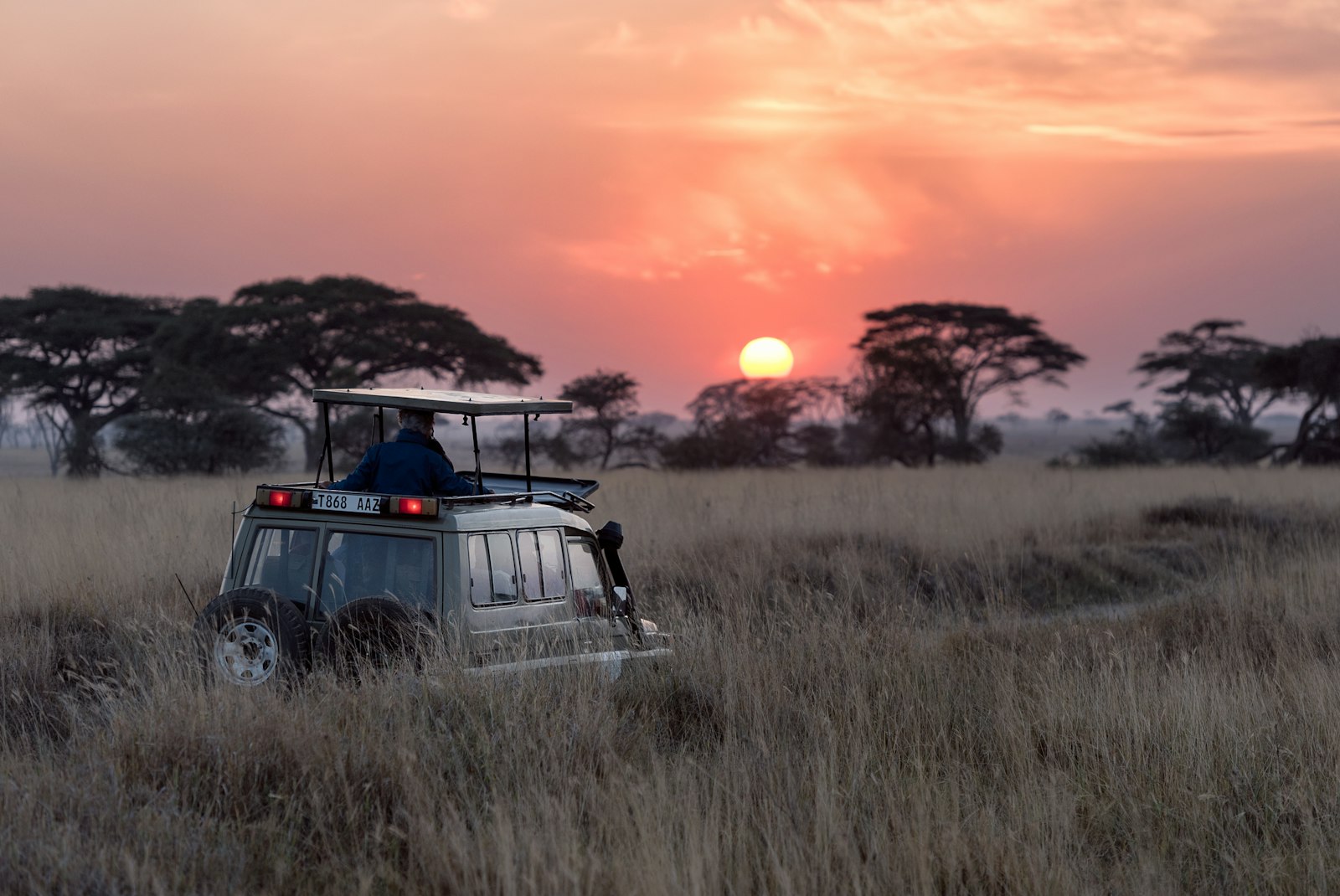
- A shared 4x4 Land Cruiser with a pop-up roof, so every seat is a window seat
- Maximum 6 travellers — never a 20-seat bus
What a seat saves you
The same itinerary, the same vehicle, the same guide — priced by how many people share it.
| Travelling as | Per person |
|---|---|
| 6 sharing one vehicleTHIS DEPARTURE | $1,050 |
| 2 travelling privately | $2,660 |
Quoted by the operator running this departure. The gap isn't a discount — a Land Cruiser, a guide and the Ngorongoro crater fee cost the same whether one person travels or six, so travelling alone means carrying all of it yourself.
Is this trip for you?
- Physical demand
- Easy — game drives from the vehicle, no hiking required
- Pace
- Two long drive days (Arusha to the Serengeti, and the Ngorongoro descent); the rest is game driving
A good fit if
- Solo travellers and couples who don't want to pay private rates
- A first safari — the classic northern circuit, nothing obscure
- Photographers: the pop-up roof means every seat is a window seat
Probably not if
- You want the vehicle to yourself
- You can only travel on dates other than these
- Long drives on rough roads are a problem for you
Day by day
Day 1
Arusha → Tarangire National Park
Pickup in Arusha after breakfast and a two-hour drive to Tarangire. Afternoon game drive among the baobabs along the Tarangire River, where the elephant herds concentrate in the dry months. Overnight at a tented camp just outside the park.
Day 2
Tarangire → Central Serengeti
An early start across the Ngorongoro highlands and down into the Serengeti. Afternoon game drive in the Seronera valley — the best year-round area for lion and leopard. Overnight in the central Serengeti.
Day 3
Full day — southern Serengeti plains
A full day on the short-grass plains where the herds calve. This is the day the trip is built around: cheetah on the open ground, hyena, and lion hunting at close quarters. Picnic lunch out in the park. Second night in the Serengeti.
Day 4
Ngorongoro Crater → Arusha
Descend 600 m to the crater floor for a morning game drive — buffalo, elephant, flamingo on Lake Magadi, and a real chance of black rhino. Ascend after lunch and return to Arusha by early evening, or transfer to JRO for an onward flight.
Included
- 4x4 Land Cruiser with pop-up roof and a licensed English-speaking guide
- All park entry and Ngorongoro crater fees
- 3 nights accommodation (tented camp / lodge, twin share)
- All meals on safari and 1.5 L drinking water per person per day
- Arusha hotel pickup or Kilimanjaro Airport (JRO) transfer
- Emergency evacuation cover for the duration of the safari
Not included
- International flights
- Tanzania visa (currently $50, or $100 for US passports)
- Travel insurance — required, and you should check it covers safari activities
- Drinks, tips and personal expenses
- Single room supplement, if you would rather not share
What to pack
A northern-circuit safari is dusty, hot by day and genuinely cold at dawn on the Ngorongoro rim. Pack for both, keep it soft-sided, and bring binoculars — that last one is the thing people most often wish they had.
Documents
- Passport, valid 6+ months beyond arrival· worth the space
- Tanzania visa$50 for most nationalities, $100 for US passports. Available on arrival or online in advance.
- Yellow fever certificateRequired if you arrive from, or transited over 12 hours through, a country with risk of transmission.
- Travel insurance documents· worth the spaceCheck it actually covers safari activities — and read the altitude and ballooning exclusions.
- Copies of everything, stored separately
Clothing
- T-shirts and long-sleeved shirtsLong sleeves protect against both sun and mosquitoes at dusk.
- Fleece or warm jacket· worth the spaceThe Ngorongoro rim can drop near 10°C before sunrise. This is the single most underpacked item.
- Light rain jacketJanuary can bring short afternoon showers.
- Trousers — one light, one warmer
- Wide-brimmed hat and sunglasses· worth the space
- Buff or light scarfFor dust on the road to the Serengeti. You will use it.
- SwimwearMost lodges have a pool.
Footwear
- Closed walking shoes or light boots
- Sandals or flip-flops for camp
Health and first aid
- Malaria prophylaxis· worth the spaceStart before you arrive — talk to a travel clinic well ahead of time.
- Insect repellent with DEET· worth the space
- Sunscreen SPF 30+ and lip balm with SPF· worth the spaceYou are near the equator at altitude; it burns faster than you expect.
- Personal prescription medicationIn original packaging, with enough for the whole trip plus a few days.
- Rehydration salts
- Motion-sickness tabletsPark roads are corrugated and the drives are long.
- Hand sanitiser and wet wipes
- Basic blister and plaster kit
Kit that makes the trip better
- Binoculars — 8x42 or 10x42· worth the spaceThe one piece of kit people regret not bringing. A leopard 200 m away is a smudge without them.
- Camera with a zoom lens300 mm or more if you have it. Wildlife rarely comes close enough for a phone.
- Power bank and spare batteriesCamp power is often generator-limited to set hours.
- Universal adapter· worth the spaceTanzania uses plug types D and G at 230 V — the same three-pin plug as the UK.
- Head torchFor camps without mains power after dark.
- Dry bag or large ziplock bagsDust gets into everything. Protect camera gear and electronics.
- Refillable water bottle1.5 L of drinking water per person per day is included.
- Small daypack
- Paperback or e-readerThe drive from Arusha to the Serengeti is long.
Money
- US dollars, series 2009 or newer· worth the spaceOlder or damaged notes are widely refused, and torn notes will be handed back.
- Small denominations for tips$5, $10 and $20 notes. Large bills are hard to break.
- A card for lodges and the airportVisa and Mastercard are accepted at most lodges; ATMs exist in Arusha but not in the parks.
Luggage
- Soft-sided duffel bag· worth the spaceHard suitcases do not pack well into a Land Cruiser's roof space.
- A smaller bag for the vehicleKeep camera, binoculars, water and sunscreen within reach during game drives.
Leave at home
- Camouflage clothingRestricted for civilians in Tanzania.
- Plastic carrier bagsSingle-use plastic bags are banned on entry.
- DroneRequires permits arranged long in advance; assume you cannot fly it.
- Dark blue and black clothingAttracts tsetse flies, whose bite is painful.
Common questions
Anything not covered here, just ask — a person in Arusha answers.
Safety and who you're dealing with
- Run by a licensed Tanzanian operator we've verified — licence and insurance checked before any departure is listed.
- Yellow fever certificate and malaria precautions — see the health guide
- Wildlife proximity and vehicle rules, briefed by your guide on day one
- Check what your travel insurance excludes before you pay a balance
SafariEA is a small team based in Arusha. We put together fixed-date group departures with operators we've checked in person, so solo travellers and couples can pay group prices. If you'd rather talk to a person before you commit to anything, that's normal — just ask.